Is 3 Too Young for AI Conversation? An Honest Answer From Our Own Logs
• KidTalk Team
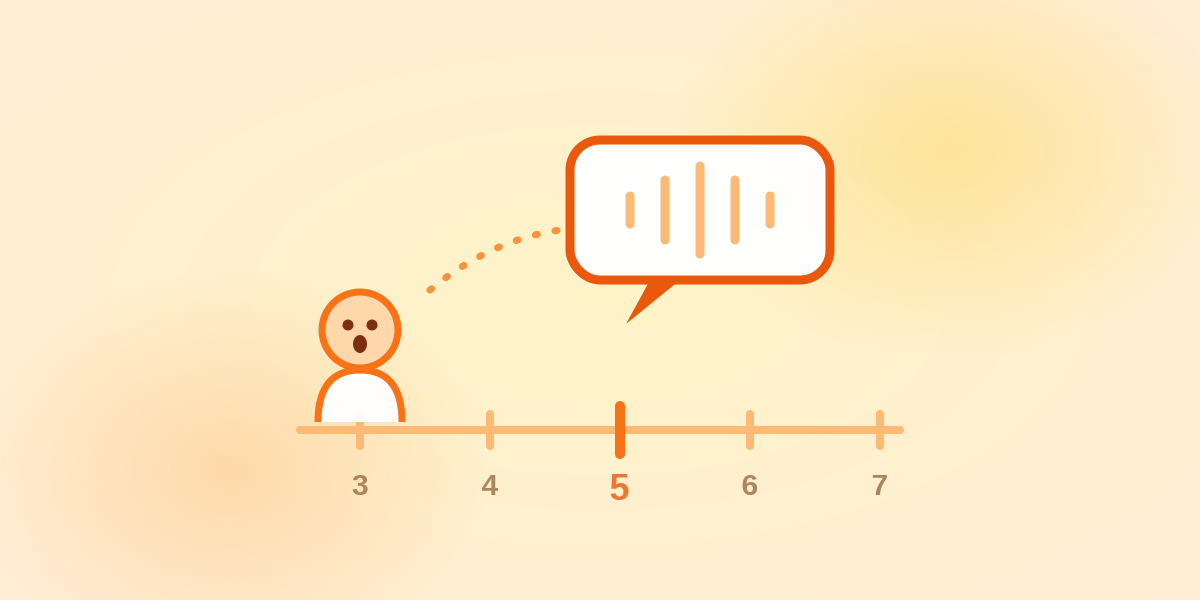
Short answer: At three, voice conversation with an AI is usually still too early — and that’s not a theory, it’s what the “didn’t work” entries in KidTalk’s own logs say. A 3-year-old’s conversation stands on shared context (the dog you both just saw, the snack they want now), and an AI is the definitive context-free stranger. As a rule of thumb, independent voice conversation starts being fun around five. Three has its own right answers — a parent’s lap, asking together, sound games — and none of them require rushing.
What our logs show at age three
KidTalk’s recent records include two three-year-old registrations (part of our observation series; details altered):
- One said “Mama, Mama, Mama” into the microphone, managed two exchanges, and never came back
- The other requested a story about a licensed cartoon character (which Poppy can’t do — copyrighted characters are off the menu, and honestly, that’s a moment where expectations and reality collide), drifted to talking about flowers, had five happy turns, and signed off
One failure and one success? That’s not our read. Both children performed exactly to age-three spec.
Three structural reasons toddler talk misses an AI
1. A 3-year-old’s language stands on shared context
“This one!” and “like before!” work perfectly with someone looking at the same thing in the same room. They carry nothing to an AI. The ability to pack context into words alone (decontextualized language) develops across ages four to five — until then, the home field of conversation is next to a human who shares the here-and-now.
2. The speech itself is hard for machines to parse
A three-year-old’s pronunciation is translatable by a parent and routinely baffling to strangers — including AI listeners. A few rounds of “hmm? say it again?” and a toddler quits the game. Not the child’s fault, not the app’s fault: a timing issue.
3. Turn-taking is still under construction
Conversational back-and-forth is what builds language — but the choreography of back-and-forth is itself still being learned at three. The child calling “Mama Mama” understood conversation as “call and someone comes,” which is developmentally perfect and precisely why alternating-turns formats don’t fit yet.
What voice can do at three
So that “too early” isn’t the end of the article:
- Asking together, from a lap. The child wonders aloud, the parent re-asks into the mic. Used that way, an AI works fine at three as a sidekick for the endless “why?” loop — the lap and the parent’s voice are the product; the app is a prop
- Sound games. “Words that start with B” — the pre-chain game — works from three, needs no AI, and runs fine in a kitchen
- Songs, books, and talk. The heavy lifters of toddler language are what they’ve always been: off-screen back-and-forth is the meal; digital is seasoning
What changes around five
The watershed in our logs is sharp. A five-year-old challenges the AI to a word game. A six-year-old puts a feeling into words. A seven-year-old asks about the news in her own sentences. Context starts traveling inside the words, the speech becomes machine-parseable, the turn-taking choreography lands — all three walls drop at roughly the same age.
That’s why KidTalk’s own age guidance honestly says: independent enjoyment starts around preschool’s final years, not before.
Frequently asked questions
My three-year-old genuinely enjoys it. Should we stop? If it’s fun, no problem. This article says “no need to push it at three,” not “take it away at three.” Together, short, and fun — that combination works at any age.
Isn’t earlier better for development? For voice AI, we have no evidence of that, and we’re the ones with the logs. What builds toddler language is human conversation, and no early-start advantage overrides it. There is zero reason to hurry.
All my child wants is stories about their favorite cartoon character. Poppy can’t tell stories about copyrighted characters (original stories, on the other hand, are a specialty). If beloved-character stories are the goal, honestly: picture books and the official shows do it better.
In summary
- Voice AI at three usually doesn’t work yet — our own failure logs say so
- Three reasons: context can’t travel in words yet, speech is hard to parse, turn-taking is under construction
- The right tools at three: lap-based asking-together, sound games, and lots of human talk
- The watershed is around five; nothing about this rewards hurrying
An app company writing “three is too early for our app” may be bad salesmanship. But a first encounter at the wrong age gets filed away as “that boring app” — the most wasteful possible introduction, for the child and for us. Around the fifth birthday, remember we said this.
Ready to try KidTalk?
Turn your child's curiosity into stories with safe, friendly AI.
Get started for freeRelated Articles

November 16, 2026
Addition and Subtraction: What Age? Within 10 at 5–6, Carrying in First Grade, and Why Counting on Fingers Is Fine

November 16, 2026
Kanji: what age? 80 in grade 1, reading before writing, and stroke order you trace rather than memorise

November 15, 2026