What Age Can Kids Use AI? An Age-by-Age Guide (2–10)
• KidTalk Team
Short answer: There’s no single “right age” for AI, because AI isn’t one thing. Heavily filtered, voice-based conversation tools built for children can suit kids as young as two or three with a parent alongside. Open-ended text chatbots made for adults are best avoided until the teen years. The key is matching the type of AI to your child’s stage — which is exactly what this guide is for.
Instead of one blanket rule, here’s what to consider at each stage from toddlerhood to age ten.
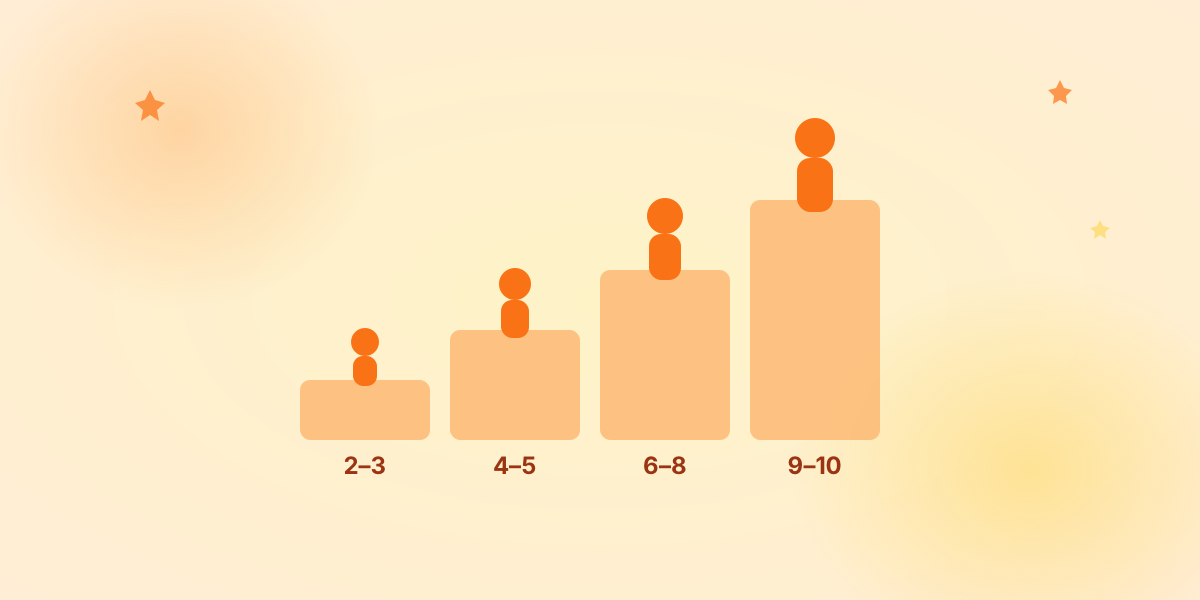
Ages 2–3: Voice-Only, Fully Guided
At this age, children are language sponges but can’t read, type, or navigate a screen. The only AI that fits is voice-based and heavily filtered, used with a parent.
- What works: Short, spoken back-and-forth with a purpose-built kids’ voice companion. The child asks a simple question (“What does a lion say?”) and hears a warm, simple answer.
- What to avoid: Anything text-based, any general chatbot, and any unsupervised use.
- Parent’s role: Fully hands-on. Sit together, treat it like reading a picture book — a shared, cozy activity.
- Watch for: Keep sessions very short. A few minutes is plenty at this age.
Ages 4–5: Voice-First, Growing Independence
Preschoolers are bursting with “why?” questions and can start to use a simple app on their own. This is the sweet spot for voice-first AI.
- What works: A press-to-talk voice companion the child can use independently for short sessions. This is the age where the speak-listen loop really accelerates vocabulary and curiosity.
- What to avoid: Text chatbots and open-ended adult AI. Reading isn’t reliable yet, and adult tools aren’t filtered for this age.
- Parent’s role: Nearby and interested. Let them lead, but ask afterward what they talked about.
- Watch for: A daily limit keeps it a treat. Look for products that build this in.
Ages 6–8: Reading Begins, Curiosity Explodes
Early elementary children are starting to read and have a real hunger for facts. AI becomes a genuine learning companion — but critical thinking is still developing.
- What works: Voice companions still shine, and lightly-supervised, child-safe question-and-answer tools can support homework curiosity and hobbies.
- What to avoid: Unfiltered general chatbots. A child this age will believe a confident wrong answer. (The full risk picture, age by age, is in Is AI Safe for Kids?.)
- Parent’s role: Coach. This is the age to start teaching that “AI can be wrong — let’s double-check.” An invaluable early critical-thinking lesson.
- Watch for: Encourage them to bring facts back to you so AI stays a conversation starter, not a solo rabbit hole.
Ages 9–10: Capable, But Still Needs Guardrails
Pre-teens are increasingly independent and may encounter AI at school. They can handle more, but they’re also more likely to seek out adult tools.
- What works: Child-safe, purpose-built tools for learning and creativity, with parental visibility. Some supervised use of mainstream tools for specific tasks can begin, with clear rules.
- What to avoid: Unrestricted, unsupervised access to general chatbots and AI companions. The content and privacy risks are real at this age.
- Parent’s role: Guide and rule-setter. Agree on what AI is for, keep it in shared spaces, and keep talking about what they’re seeing.
- Watch for: Emotional over-reliance and privacy. Reinforce that AI isn’t a human friend and personal information stays private.
A Quick Reference Table
| Age | Best fit | Avoid | Parent’s role |
|---|---|---|---|
| 2–3 | Voice-only, guided, very short | Text, general chatbots | Fully hands-on |
| 4–5 | Voice-first, short solo sessions | Adult AI, text chat | Nearby, interested |
| 6–8 | Voice + child-safe Q&A | Unfiltered chatbots | Coach on “AI can be wrong” |
| 9–10 | Child-safe tools + supervised mainstream use | Unsupervised general AI | Guide and rule-setter |
Three Principles That Apply at Every Age
Whatever the age, these hold true:
- Match the tool to the child, not the child to the tool. The question isn’t “is my child ready for AI?” but “which kind of AI fits where my child is now?”
- Purpose-built beats general. At every age under about thirteen, a tool designed for children is safer than an adult product with restrictions added on top.
- Stay involved. The single biggest safety factor across every age band is an engaged parent — starting fully hands-on and gradually shifting to coach and guide.
Where KidTalk Fits
KidTalk is designed for the youngest end of this range — roughly ages 2 to 8 — where voice-first, heavily-filtered conversation is the right fit. It’s press-to-talk, age-appropriate by design, filtered for safety, and built with daily limits so it stays a healthy part of the day. For a two-year-old it’s a guided, shared activity; for a seven-year-old it’s a curiosity companion they can largely drive themselves. (More on why voice suits this age in Why Voice-First AI Is Perfect for Children Who Can’t Read Yet.)
Frequently Asked Questions
Can a 3-year-old use AI? Yes — but only the right kind. A voice-based, heavily-filtered companion built for young children, used alongside a parent, can suit a three-year-old. Adult text chatbots are not appropriate at this age.
What’s the best age for a child to start using AI? There’s no universal number. Voice-first tools built for kids can start around two or three with supervision. Open-ended adult AI is best saved for the teenage years.
Is ChatGPT okay for a 10-year-old? General chatbots are designed for adults and lack child-specific safeguards. If used at all at this age, it should be for specific tasks, supervised, with clear rules — not open, unsupervised access. A purpose-built child-safe tool is a better default.
How much AI time is appropriate for young kids? Keep it short and treat-like, especially under five. Look for tools with built-in daily limits, and prioritize active back-and-forth over passive consumption.
The Takeaway
“When can my child use AI?” doesn’t have a birthday answer — it has a type answer. The right AI for a three-year-old (guided, voice-only, filtered) is completely different from the right AI for a ten-year-old (child-safe tools with supervised independence). Match the type of AI to your child’s stage, choose products built for children over adult tools, and stay involved as their guide. Do that, and AI can grow alongside your child, safely, at every age.
Ready to try KidTalk?
Turn your child's curiosity into stories with safe, friendly AI.
Get started for free