What Kids Actually Ask an AI: Three Findings From the Logs
• KidTalk Team
Short answer: Running a children’s voice AI puts you at an odd observation point: what do children ask when the listener is un-judging, un-hurried, and untirable? Three patterns keep appearing. ① Questions cluster overwhelmingly around the near-at-hand — rain, stones, fingernails, bugs — not the cosmic. ② Good answers chain: why → simpler please → then what about…? ③ Children negotiate the difficulty level themselves — “say it more simply.” Everything here is statistical and anonymized; no individual, name, or identifiable conversation appears. And at the end: why this is usable at your dinner table tonight.
Operating a kids’ AI means standing somewhere unusual: hearing (in aggregate, within our data principles) what children ask a listener with no social cost. Here’s what the patterns say.
Finding 1: The questions aren’t cosmic — they’re underfoot
Adults imagine children asking “where does the universe end?” The real distribution points at whatever crossed the child’s path that day:
- “Why does it rain?” (it rained that day, near certainly)
- “Why do nails keep growing?” (someone’s nails got cut)
- “Why are some stones big and some small?” (a pocket got filled)
This confirms in data what the why-phase piece argued: a child’s questions are less an abstract hunger for knowledge than a log of that day’s contact with the world. Read the questions and the day becomes visible.
Finding 2: A good answer produces the next question
The most beautiful pattern in the logs is the chain. One real sequence (details altered):
Why are there stones? → Did they come from volcanoes? → What ways besides volcanoes? → Tell me the kinds of stones
Each next question is built from a fragment of the previous answer. It’s the question-side version of what the turn-taking research shows: an answer’s value is decided by whether it’s an endpoint or a launchpad. The answer that produces “then what about—?” carries more than the one that produces “wow.”
Finding 3: Children negotiate the level themselves
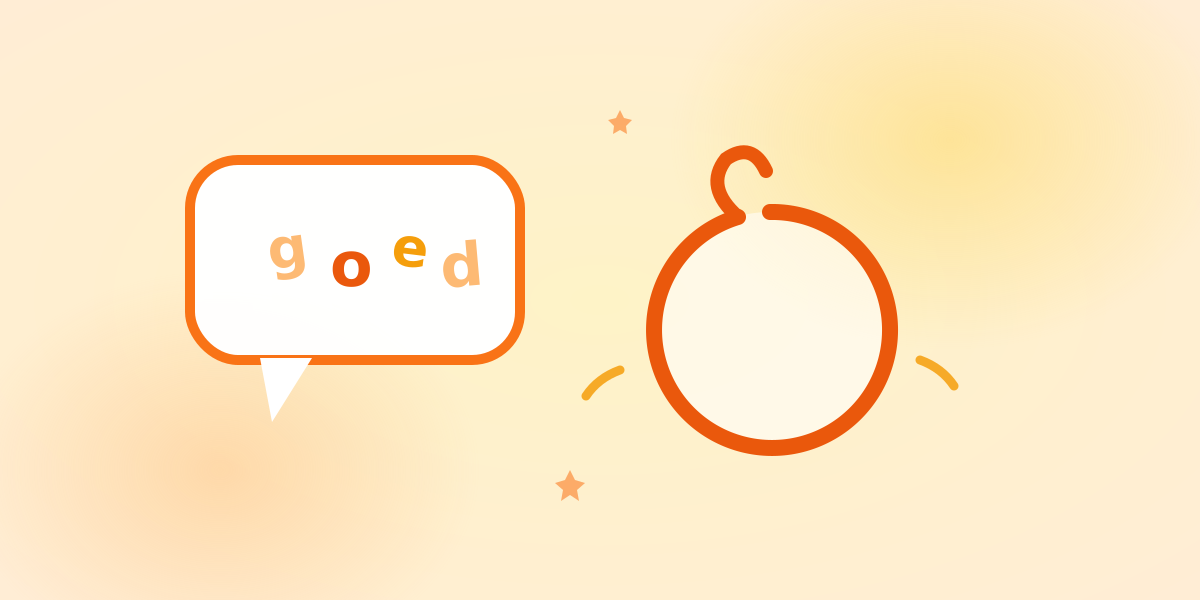
The finding we didn’t expect: faced with a too-hard answer, children don’t only go quiet — given a safe listener, they file a revision request: “say it more simply.”
We read this as hopeful. A mismatched explanation doesn’t have to end the conversation; with a listener who costs nothing, a child will confidently demand a rebuild. The converse thought is worth sitting with: the child who goes silent in class (the quiet-child piece) may have revision requests queued all along — just no safe place to file them.
What a parent can do with all this
The three findings translate directly:
- Harvest the underfoot. Before lamenting that no questions come, look at what crossed your child’s path today. Nail-clipping, rain, a pocketed stone — each is a door
- Leave a handle on your answers. Don’t explain to completion; “some stones come from volcanoes — some” leaves the next question a handle to grab. It’s the answering craft in miniature
- Make “say it simpler” a household phrase. A home where children can demand simpler versions of the parents’ explanations is a home where questions keep coming
The honest footnote
These are patterns from a small operation, not a study. No individual conversations, names, or identifiable details are included — by policy, not just choice (privacy policy). We share it anyway because the observation point itself is new — what children ask when asking is free — and every clue about how children’s curiosity actually moves seems worth handing to parents.
Frequently asked questions
Is my child’s data used for this? Only unidentifiable aggregate patterns appear here. Conversation data is used for generating replies and showing history to the guardian — not for training, not for advertising. The full journey of a recording is documented here.
My child only asks mundane questions, never deep ones. The mundane ones are the deep ones in disguise. “Why do nails grow” opens onto cell division; “why does it rain” onto the water cycle. The only variable is whether someone walks through the door with them.
Shouldn’t the parent be the one answering, not an AI? When a parent is available, the parent is the better listener — no contest. What the data adds is that more landing places means more total questions — and when what was asked is visible to you, it seeds the next human conversation.
In summary
- Children’s questions are underfoot, not cosmic — a log of the day’s contact with the world
- Answers that leave a handle produce chains; complete answers produce silence
- Given a safe listener, children negotiate difficulty themselves
- At home: harvest the underfoot, leave handles, make “simpler please” official
What the question logs testify to most isn’t anything about AI. It’s how much of the world children are actually seeing. Whatever crossed your child’s path today — tonight’s question is probably sleeping in it.
Ready to try KidTalk?
Turn your child's curiosity into stories with safe, friendly AI.
Get started for free