My Child Is Bored in Class Because the Work Is Too Easy — What Parents and Schools Can Do
• KidTalk Team
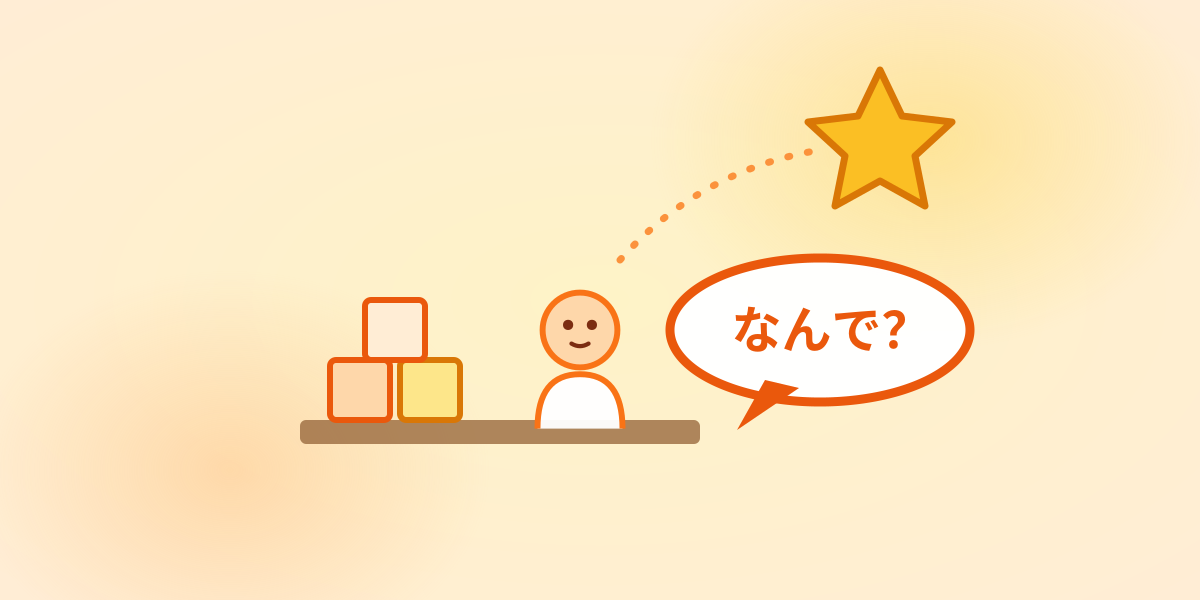
Short answer: What a child who finds class too easy usually needs isn’t acceleration — it’s depth. The same topic, explored wider and further in the direction of “why?” At school, ask about what your child can do when they finish early. At home, add time for questions without a single answer. Leaving boredom alone can lead to classroom trouble and a belief that “school is boring,” so it’s worth acting early.
The child who’s ahead of the class
Japanese has a word for this: ukikobore — the child who “floats out” of the lesson because it’s too easy, the mirror image of the child who falls behind. It isn’t a diagnosis; it’s the name for a situation in a classroom. English-speaking educators talk about “unchallenged” or “advanced” learners, and the issues are the same everywhere.
One six-year-old in our logs
In KidTalk’s conversation logs, a six-year-old talked to the AI like this (part of our log-observation series; details altered):
“My class is learning colors, but it’s too easy for me.” “Think of something I can do while everyone else is working.”
Then the child asked the AI to give step-by-step drawing instructions. A child searching for a way to fill the boredom on their own. That a six-year-old can put it into words is striking — far more children can’t.
What happens when boredom is left alone
- Classroom trouble: chatting, wandering, poking classmates. They get seen as “the restless one”
- “I can do it without trying” becomes normal: fewer chances to practice persevering when something is actually hard
- Losing interest in school: “school is a boring place” takes root
“They’re bright, they’ll be fine” isn’t always true. That’s what makes this tricky.
How to raise it with the teacher
Teachers are watching 25 or 30 children. “My child is special” rarely lands well.
A way to phrase it:
“At home, my child mentions finishing work early and having time with nothing to do. If there were something quiet they could do when they finish — an extension worksheet or a book — I think they’d settle better. Is there anything like that we could try?”
Three points: share only what you observe at home, ask about what to do after finishing — not about changing the lesson, and leave the call to the teacher. Having quiet extension work on hand often helps the teacher too.
If the school’s tablets only allow certain apps, understanding why school tablets are locked down makes that conversation smoother.
At home: depth before acceleration
Acceleration — doing next year’s content now — can deepen classroom boredom, because the child then hears material they already know.
Instead, widen the current topic:
- Learning addition → “What do you get if you add all the numbers up to 100?” “What happens if you keep adding forever?”
- Learning about plants → “Why are leaves green?” “Why do they change color in autumn?”
- Reading a story → “What happens next?” “Tell it from the villain’s point of view”
Questions without an answer — or with more than one — and a parent who sticks with them. Riding out the endless “why?” is the best nourishment for an advanced child.
Can AI help a bored child?
As the six-year-old in our logs showed, AI does suit some of this — as a partner who’ll take “why?” as far as the child wants. KidTalk’s Poppy adjusts the depth of its explanation to the child’s age setting, so it can go a level deeper on the same question.
Honest limits, though:
- Using it during class depends entirely on the school’s rules. It isn’t something to use in class without permission
- AI isn’t a coach that builds the skill of asking good questions; it answers what it’s asked
- Exchanges are about ten seconds each. People — parents, teachers, books, encyclopedias — lead deep exploration
One of the partners for continuing the “why?” a lesson sparked, at home — that’s the accurate role.
FAQ
Should we get a gifted assessment? More important than any test is whether your child is bored or struggling right now. If daily or school life is significantly affected, consulting a developmental specialist is one option.
Should we avoid working ahead entirely? If your child is strongly interested, there’s no need to stop them. But “they’re bored, so move them ahead” can deepen the boredom — try depth first.
They refuse homework at home too because “it’s too easy.” Add a twist: “Make this problem harder and give it to me.” Switching to the problem-writer’s side changes how the same homework uses their brain.
Summary
- Unchallenged boredom can lead to classroom trouble and disliking school
- Ask the school about what to do after finishing early, not about changing the lesson
- At home, depth before acceleration: widen the current topic toward “why?”
- AI can be one partner for continuing “why?” — people lead deep exploration
“It’s too easy” is, turned over, “I want to know more.” A bored child may not be the school’s fault or their own — their curiosity may simply need somewhere to go.
Ready to try KidTalk?
Turn your child's curiosity into stories with safe, friendly AI.
Get started for freeRelated Articles

November 16, 2026
Addition and Subtraction: What Age? Within 10 at 5–6, Carrying in First Grade, and Why Counting on Fingers Is Fine

November 16, 2026
Kanji: what age? 80 in grade 1, reading before writing, and stroke order you trace rather than memorise

November 15, 2026