Selective Mutism vs. Shyness: How to Tell the Difference
• KidTalk Team
Short answer: A shy child warms up and eventually speaks; a child with selective mutism wants to speak and cannot — in specific settings, consistently, every time. Three markers matter: normal speech at home but a consistent inability to speak in particular settings; lasting more than a month (excluding the first month of a new school); and distress or real interference with daily life. If that describes your child, don’t wait for them to grow out of it — talk to the teacher, a school counsellor, or your paediatrician. This article can’t diagnose anything. What it can do is tell you that asking for help is warranted.
After we published our piece on quiet children, several parents wrote with a version of the same question: “I don’t think practice is going to fix this. Is this still shyness?”
Trust that instinct. This article is for that question.
What selective mutism is
Selective mutism is recognised in the international diagnostic manual (DSM-5) as an anxiety condition. Its shape:
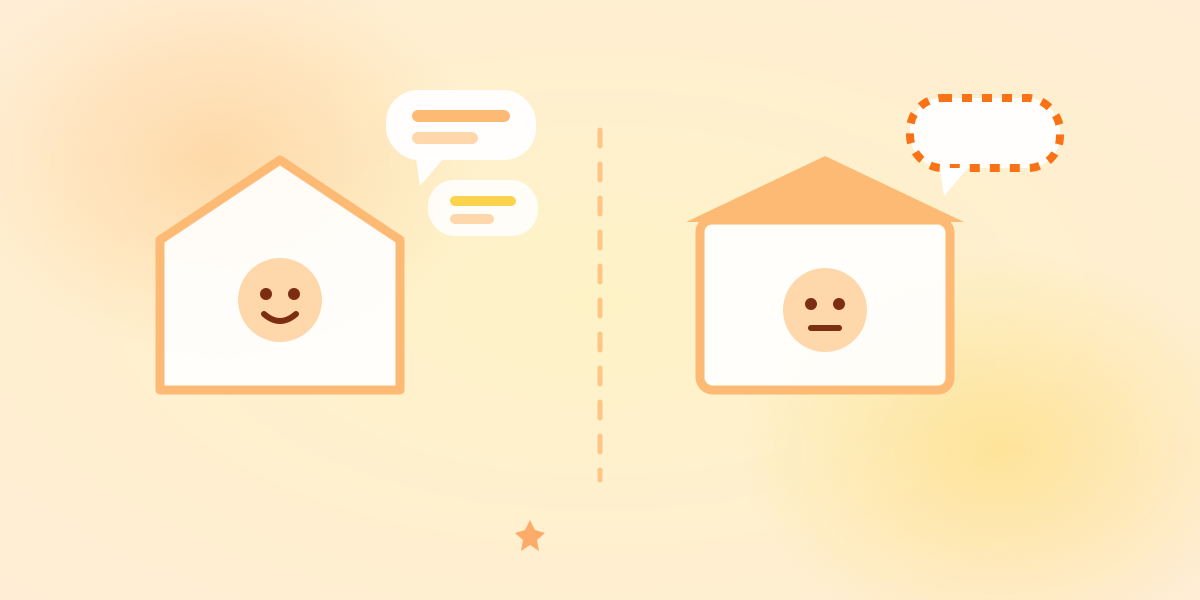
- The child speaks completely normally in settings where they feel safe — usually home
- In specific social settings — school, preschool — they are consistently unable to speak
- Onset is typically between ages 2 and 5, becoming visible when school starts
- Prevalence is estimated at a bit under 1% — uncommon, but not rare
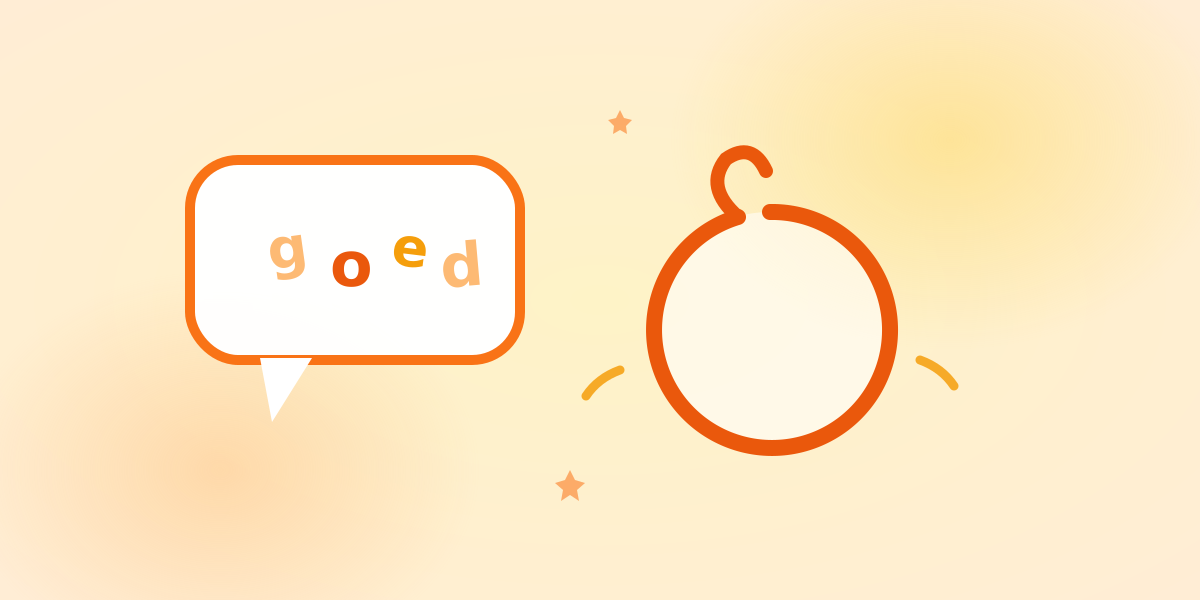
The most damaging misunderstanding is baked into the name: “selective” sounds as if the child is choosing silence. It’s the opposite. The child wants to speak and, in that setting, cannot — as if the voice is locked. Not defiance, not stubbornness: anxiety with the volume turned all the way up.
Four ways to tell it from shyness
| Shy temperament | Possible selective mutism | |
|---|---|---|
| Over time | Warms up; gradually speaks | Months pass; the setting stays silent |
| Degree | Quiet voice, short answers — but answers | Often not one word, including greetings and yes/no |
| Consistency | Varies by day, mood, person | The same settings, every time, without exception |
| The child’s state | Bashful but engaging | Frozen posture, fixed expression; even nodding can be hard |
There’s also a duration marker: the diagnostic criteria require it to persist beyond one month, not counting the first month of a new school. So “hasn’t spoken in class during the first weeks of term” is still within watch-and-see; still silent when the second term starts is when to ask for help.
What helps at home — and what backfires
None of this replaces professional support, but the home’s posture genuinely matters.
Do:
- Protect the place where they speak freely. Home is the wellspring of that child’s voice; keeping it flowing is the single most important job
- Don’t grade the day by whether they spoke. A nightly “did you manage to talk today?” adds pressure to exactly the wrong scale
- Accept non-verbal participation. Nodding, pointing, writing — real communication, all of it
- Brief the teacher. “Please don’t cold-call her for spoken answers; questions she can nod to work better” — most teachers will gladly adjust
Don’t:
- Prompt speech on the spot. “Say hello to the nice lady” asks for speech in the exact setting where speech is locked — it feeds the anxiety
- Explain them in their hearing — “she can’t talk to people.” Labels stick, and this one teaches the child who they are
- Wait on “they’ll grow out of it” alone. Early help is not an overreaction; anxiety patterns don’t reliably loosen with time by themselves
Where to go
Escalate gently, starting close to home:
- The class teacher — sees the setting daily; start by comparing notes
- The school counsellor — parents can consult alone, without the child
- Your paediatrician — can refer onward to child mental-health services if warranted
- Local child-development services — in many areas, free and well-connected
If “specialist” sounds heavy: what actually happens is largely gentle — play-based observation, coordination with the school. You’re not going to collect a label. You’re going to collect a plan that fits this child.
Where speaking practice fits — honestly
The no-audience practice from the quiet-child piece — talking to a stuffed animal, a pet, an AI — can matter here too, as a safe place at home where the voice keeps flowing. Preserving that fluency is a real part of the foundation.
But here is the honest line: no practice app builds the bridge between speaking at home and speaking in the classroom. Building that bridge is precisely what professional support does. KidTalk included, conversation practice is foundation maintenance for this condition — never the treatment.
Frequently asked questions
The teacher says “let’s wait and see.” Teachers’ instincts are often right — but selective mutism is easy to deprioritise because silent children don’t cause trouble. If all three markers hold — every time, more than a month, not one word — consult a counsellor or paediatrician in parallel with the school’s patience.
Did we cause this? No. Selective mutism grows from an anxiety-prone temperament; there’s no evidence that parenting causes it. Spend the energy on adjusting the environment, not on the search for fault.
Can I ask my child why they can’t talk? Asked warmly, yes — but they often can’t put a reason into words. “What would make it easier?” (Would answering by nodding help?) tends to be more productive than “why can’t you?”
Does it get better? With appropriate support, most children expand the settings where they can speak, step by step. Speed matters: the best outcomes come when help starts before the child’s own “I’m someone who can’t talk” image — and the classroom’s image of them — hardens.
In summary
- Shy children warm up; selective mutism means wanting to speak and being unable, in fixed settings
- Three markers: consistent in specific settings · over a month · distress or interference
- Home’s job: keep the safe speaking place safe; never prompt speech on the spot
- Teacher → counsellor → paediatrician → local services; early is not overreacting
- Practice maintains the foundation; professionals build the bridge
One last time, because it matters: this article offers markers, not a diagnosis. But if you’ve read this far and thought this might be my child — that thought is already a good enough reason to ask someone.
Ready to try KidTalk?
Turn your child's curiosity into stories with safe, friendly AI.
Get started for free