Tongue Twisters: What Age Can Kids Do Them? Laughing at 4–5, Getting Them Right at 6–7, Racing at School Age (30 to Try, Plus Japanese Ones)
• KidTalk Team
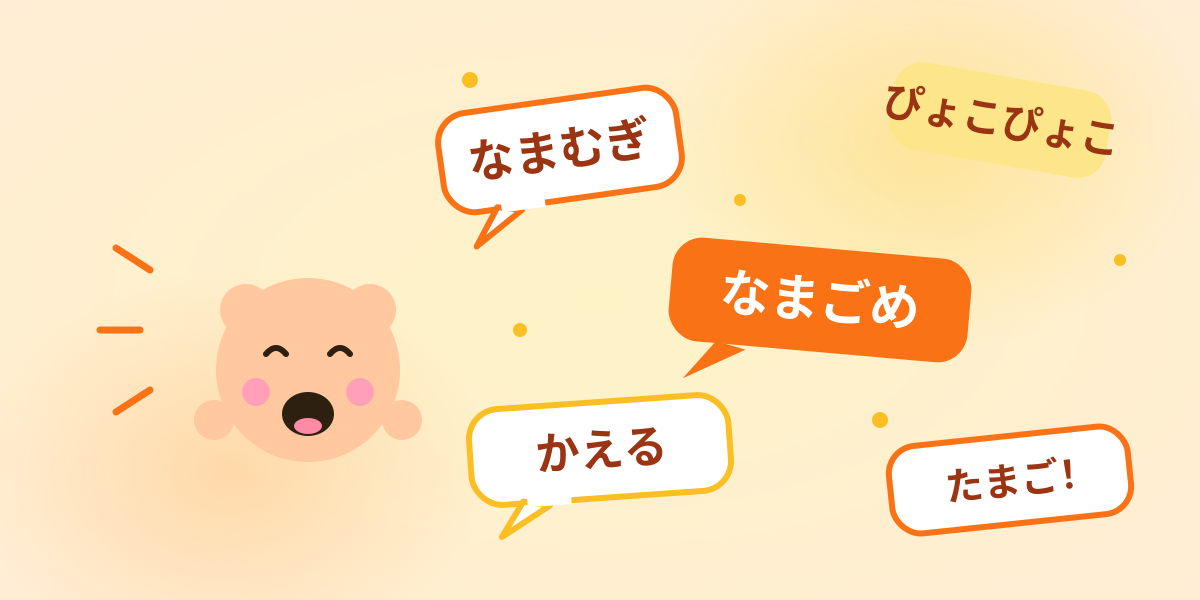
Short answer: Children enjoy short tongue twisters from about 4–5 as a game of saying it fast and laughing. Around 6–7, once the late consonants settle, they can say the classics correctly, and school-age children race the clock and make up their own. The point is never to get it right; it is to try, trip, and laugh. After shiritori and riddles, this is the third word game in our series. This post covers the order by age, what the game exercises, how to play at home, 30 twisters by level, five Japanese ones as a bilingual bonus, and how to think about a child whose tongue will not cooperate.
Why tongue twisters come after shiritori and riddles
Shiritori pulls the last sound off a word; riddles twist what a word means. Tongue twisters treat words as a physical exercise for the mouth.
- No equipment. The car, the bath, bedtime. One twister in memory is a whole game.
- Failing is the fun. The moment “seashells” comes out as “sheshells”, everybody laughs. The mistake is not a penalty; it is the game itself.
- Adults fail too. Shiritori and riddles favour the adult. Tongue twisters make parents stumble, which makes this one of the few word games played as equals.
One caution. A tongue twister works even when it is said wrong. If the goal becomes “say it properly”, a child whose speech sounds are still developing finds it stressful. More on that below, but before six, “tried” is enough.
The order children actually follow
Ages 4–5: short ones, said fast, for the laugh
Ask for: a short twister said slowly, then fast, then a laugh. Do not ask for: correct sounds, long classics.
Short twisters built on one repeated sound suit this age: “Red lorry, yellow lorry”, “I scream, you scream”. Some consonants are still settling, so when “lorry” comes out “wowwy”, do not correct it; say it at the same speed and trip over it yourself.
Ages 6–7: the classics, said right
Ask for: “She sells seashells” said correctly at a slow pace. Do not ask for: fast, three times, in one breath.
The later English consonants (r, l, th, and the s/sh contrast) are typically the last to settle, and most children have the full set by about age 7, with wide individual variation. That is when tongue twisters become a game a child can win, and when “you got it!” is worth celebrating.
School age: racing and inventing
Ask for: three in a row, against the clock, and their own creations. Do not ask for: anything in particular. At this age the child can run the game.
Elementary children turn it into a sport: “three times without slipping”, “how many in ten seconds”. And they start to invent. A home-made “Big black bugs bleed blue blood” is proof that the child hears how the sounds are built.
What the game exercises
We have not found research on tongue twisters specifically in young children, so this is a description of what is happening, not a promise of results.
- Mouth movement. Rapid switching between tongue, lips and jaw. “Peter Piper” is lips; “toy boat” is tongue and lips alternating.
- Hearing the pieces of a word. Where “seashells” and “seashore” are the same and where they differ is checked by ear and mouth at once. This is the same phonological awareness that shiritori builds and that early reading rests on.
- Listening to your own voice. Knowing where you slipped is the most interesting part. A child who says “I said sheshells!” is monitoring their own speech.
- Breath. Trying a long one in a single breath and running out halfway is a small lesson that carries into reading aloud and singing.
Playing at home
- Slow first. Syllable by syllable, like tapping a drum. Speed comes on the third try.
- The rule of three. Three attempts, then move on. Stopping before it gets tiresome is what makes “again tomorrow” happen.
- Record and replay. A phone recording lets the child hear their own slip and laugh at it. Listening to your own voice becomes a habit without anyone teaching it.
- Parents trip for real. A parent who honestly fumbles “the sixth sick sheik” gives the child permission to fail.
- Keep one as a party piece. Pick the one twister the child can say and save it for the grandparents, the way winter-break learning works best with an audience.
Because it is a game of voices, a voice to play with keeps it going. KidTalk’s Poppy can say a twister slowly and listen to the child’s retry, which is one way to hand the game off on a tired evening.
30 tongue twisters by level
Ages 4–5 (short, one repeated sound)
- Red lorry, yellow lorry.
- I scream, you scream, we all scream for ice cream.
- Toy boat, toy boat, toy boat.
- Big bug, bad bug.
- Fresh fried fish.
- A big black bear sat on a big black rug.
- Zebras zig and zebras zag.
- Four fine fresh fish for you.
- Sheep should sleep in a shed.
- Eddie edited it.
Ages 6–7 (the classics, said right)
- She sells seashells by the seashore.
- Peter Piper picked a peck of pickled peppers.
- How much wood would a woodchuck chuck if a woodchuck could chuck wood?
- Betty Botter bought some butter.
- Rubber baby buggy bumpers.
- Which witch is which?
- Unique New York.
- Six slippery snails slid slowly seaward.
- A proper copper coffee pot.
- Thirty-three thirsty, thundering thoroughbreds.
School age (long, timed, home-made)
- The sixth sick sheik’s sixth sheep’s sick.
- Pad kid poured curd pulled cod.
- Can you can a can as a canner can can a can?
- If two witches were watching two watches, which witch would watch which watch?
- I thought a thought, but the thought I thought wasn’t the thought I thought I thought.
- Red lorry, yellow lorry, three times in ten seconds (the race version).
- Poppy popped popcorn, plop, plop, into her pocket. (ours)
- A tired tiger tiptoed to the tiny tent. (ours)
- Seven silver spoons slipped past the sleepy spider. (ours)
- The rooster rushed round the rainy roof. (ours)
Numbers 27–30 are ours. Two recipes make them: string together three or more words that start with the same sound, or line up near-twins (tired, tiger, tiptoed, tiny). Children can do both.
Five Japanese tongue twisters, for a bilingual bonus
Japanese tongue twisters work the same way, and a child who hears Japanese at home will know some of these already. Romaji first, meaning in brackets.
- Nama mugi, nama gome, nama tamago. (Raw wheat, raw rice, raw egg.) The one every Japanese child knows first.
- Aka makigami, ao makigami, ki makigami. (Red scroll, blue scroll, yellow scroll.)
- Tonari no kyaku wa yoku kaki kuu kyaku da. (The guest next door is a guest who eats a lot of persimmons.)
- Tōkyō tokkyo kyoka-kyoku. (Tokyo Patent Licensing Office.) The kyo cluster is the trap.
- Bōzu ga byōbu ni jōzu ni bōzu no e o kaita. (A monk skilfully painted a picture of a monk on a folding screen.)
These make a good two-way game: the Japanese-speaking parent tries the English ones, the English-speaking parent tries the Japanese ones, and the child judges.
FAQ
My child cannot get the sounds right. Should I worry? Before six, a wobbly r, l or th is part of normal development. Tongue twisters are a game, not speech practice, so do not use them to correct a sound. If a particular sound is still unclear well past seven, or other people often ask the child to repeat themselves, a word with the school or a speech-language therapist is reassuring. Drilling with tongue twisters tends to backfire.
My child sometimes stutters. Should we skip tongue twisters? A “say it fast” game can add pressure for a child whose speech sometimes blocks. If the child enjoys it, there is no need to stop, but do not ask for “faster” or “again”, and do not make the slip the joke. If in doubt, keep the slow version only, or pick a word game that does not reward speed, like shiritori or riddles.
When can children say them correctly? Around 6–7 as a guide, with wide variation. A second- or third-grader who cannot manage “the sixth sick sheik” is entirely normal. Watch whether the child is laughing on the third try, not the age.
How do I teach them to make their own? Start with “collect three words that start with the same sound”. Three c words (cat, cake, car) become “the cat carried cake in the car”. It does not have to make sense. A home-made twister belongs to that child alone.
Summary
- Ages 4–5: short ones, said fast, for the laugh. Ages 6–7: the classics, said right. School age: racing and inventing.
- The late consonants settle around 6–7. Before that, “tried” beats “got it”.
- What it exercises: mouth movement, hearing the pieces of a word, listening to your own voice, breath. A description, not a promise.
- How to play: slow first, the rule of three, record and replay, parents trip for real.
- If speech sounds worry you, do not drill with tongue twisters. Past seven, ask a professional.
Related: Shiritori and word games: what age, Riddles: what age, English for Japanese kids: what age, Shiritori (Play & Learn), Riddles (Play & Learn)
Ready to try KidTalk?
Turn your child's curiosity into stories with safe, friendly AI.
Get started for freeRelated Articles

November 16, 2026
Addition and Subtraction: What Age? Within 10 at 5–6, Carrying in First Grade, and Why Counting on Fingers Is Fine

November 16, 2026
Kanji: what age? 80 in grade 1, reading before writing, and stroke order you trace rather than memorise

November 15, 2026