Flags of the World: What Age, the Order Children Learn Them, and Why English Country Names Belong Alongside (Free 197-Flag Quiz)
• KidTalk Team
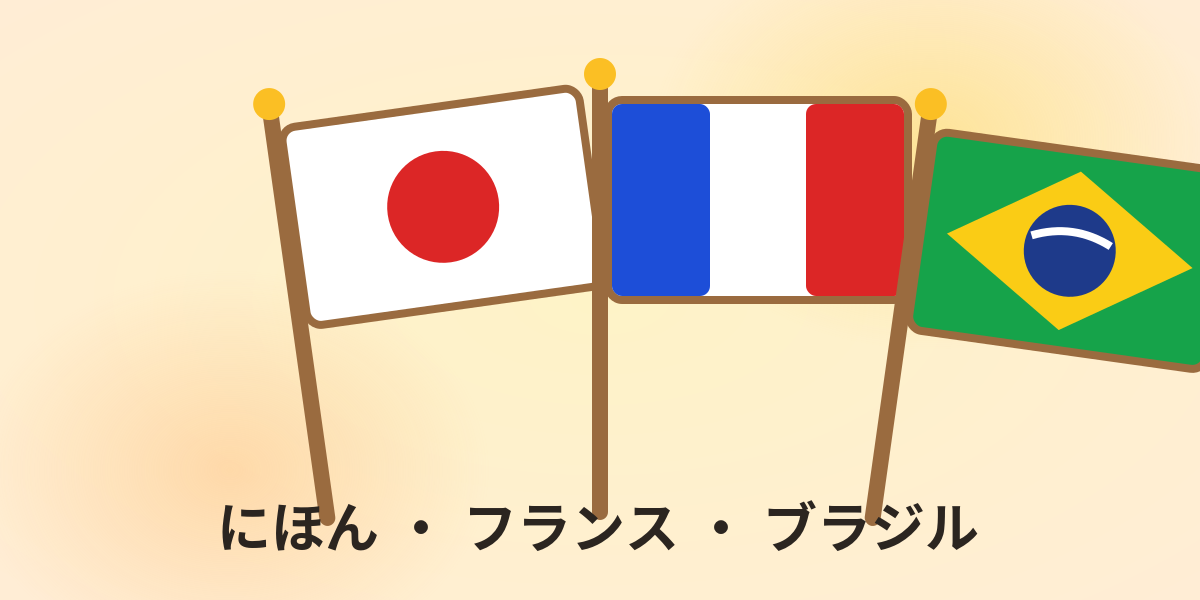
Short answer: Children can tell flags apart by shape and colour at 3–4, say the country names at 5–6, and link flags to places and capitals at school age. A flag-loving three-year-old who knows fifty countries is not unusual, and it is less about a gift for memorising than about flags being a child-sized subject to begin with. This post covers the order such children actually follow, what parents can do, and the idea of learning English country names alongside the flags. At the end, the 197-country flag quiz we built.
Why flags are a child’s first map of the world
Flags are among the first things children learn about the world, for clear reasons.
- They are only colour and shape. A child who cannot read can still tell 🇯🇵 from 🇫🇷.
- The set is finite and visible. 197 countries fit in one book, so “I know them all” is possible.
- Adults do not know them. A parent asking “wait, which country is that?” is a rare chance for a child to teach.
It is the same collecting instinct as dinosaurs or trains, but flags have a sequel: names, places, capitals, languages, food. One path runs from flags to world geography and to a second language.
By age: the order children follow
Ages 3–4: telling them apart
Ask for: seeing a flag and saying “Japan!” or “Canada, the leaf”. Don’t ask for: the correct name, or where the country is.
Start with flags with one strong feature: Japan’s circle, Canada’s leaf, Brazil’s diamond, Switzerland’s cross, Turkey’s crescent. Look-alikes (the Nordic crosses, the South American tricolours, the African tricolours) can stay muddled for now.
Ages 5–6: naming, and grouping
Names arrive here, and so does the moment a child notices which flags look alike. “Norway and Denmark are the same!” “What is the difference between Australia and New Zealand?” That is observation, and it transfers far beyond flags.
What a parent can add is one sentence of why: “The Nordic countries share that cross.” “Countries that used to belong to Britain have its flag in the corner.” A reason lets a child remember a whole group.
School age: places, capitals, and English
In Japan, world countries come up in fifth-grade social studies, when the atlas puts a flag next to each country. That is where flag → place → capital first connects. A child who already knows the flags opens an atlas full of familiar friends.
The other thing to add here is the English country name. Japan, France, Brazil. A child who can say them while looking at the flag already owns those words when they turn up in English class.
What parents can do
- Show the real thing. The Olympics, the World Cup, airports, embassies, food packaging. “That’s the one!” is the moment that sticks.
- Put look-alikes side by side. Instead of avoiding the muddle, turn finding the difference into the game.
- Take one step past the flag. “What language do they speak?” “What do they eat?” One question, not a lecture.
- Say the English name out loud. A parent’s accent is fine. A recording alongside is even better.
A 197-country flag quiz
Play & Learn › Flags of the world is the order above turned into a tool.
- 197 countries: the 193 UN members plus Taiwan, Vatican City, Kosovo and Palestine
- Start with the well-known: 39 countries (Japan and its neighbours, the G7, the Olympic regulars), then widen region by region (Asia, Europe, Africa, North America, South America, Oceania)
- Four ways to play: Flip (from 3, no score), Flag → country (see the flag, pick one of three names), Country → flag (Poppy says the country, pick one of three flags; no reading needed), Capitals (school age)
- Two voices: flip a flag and the Japanese and English names sit side by side, each read in its own voice when tapped
- Wrong cards from the same region, so the Nordic crosses and South American tricolours mix and the child practises telling look-alikes apart
- Free, no login, records stay on the device
The flag images are the open-source flag-icons set (MIT licence).
Frequently asked questions
Is there any point in memorising flags? The value is less in the memorising than in telling similar things apart, grouping them, and teaching an adult. It is also a doorway to geography and to a second language.
My child mixes up similar flags. Should I correct them? No need. Put the two side by side and ask what is different. As with riddles and English words, children keep going when a miss is safe.
Should they learn capitals too? School age is soon enough. The order is flag → name → place → capital, and place comes first.
Summary
- Flags: telling apart at 3–4, names at 5–6, places and capitals at school age
- Do not avoid look-alikes; line them up, and add one sentence of why
- English country names next to the flags open a door to English
- The 197-flag quiz is free, with Japanese and English voices
Ready to try KidTalk?
Turn your child's curiosity into stories with safe, friendly AI.
Get started for freeRelated Articles

November 16, 2026
Addition and Subtraction: What Age? Within 10 at 5–6, Carrying in First Grade, and Why Counting on Fingers Is Fine

November 16, 2026
Kanji: what age? 80 in grade 1, reading before writing, and stroke order you trace rather than memorise

November 15, 2026