Is It OK for Kids to Mix Two Languages? Why Code-Switching Is a Skill, Not Confusion
• KidTalk Team
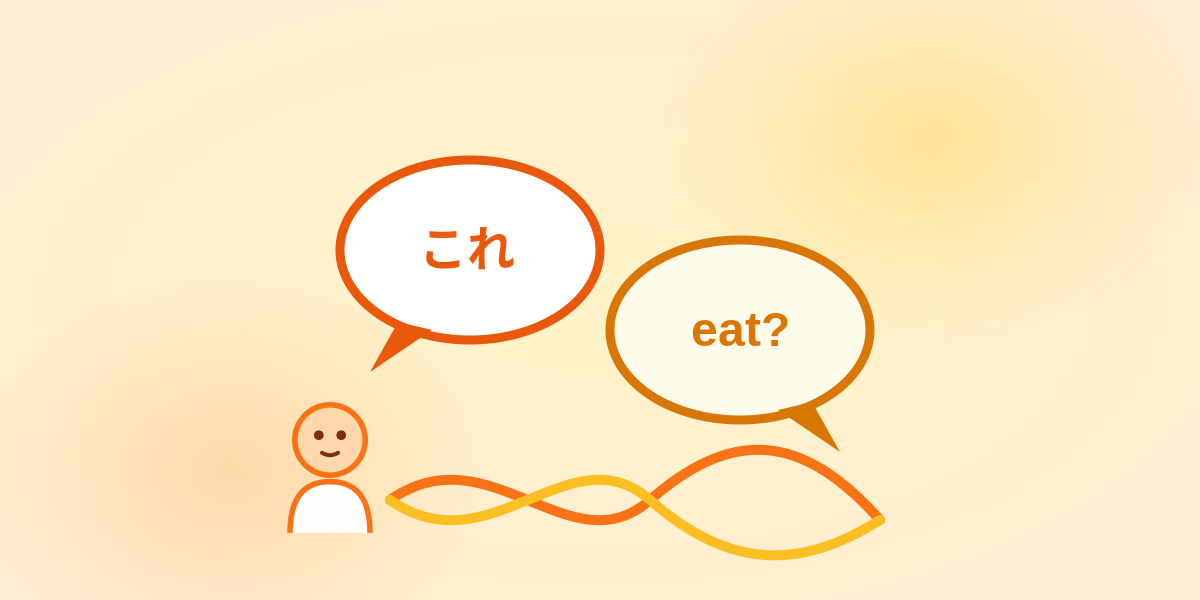
Short answer: When a child mixes two languages, it’s almost always nothing to worry about. Linguists call it code-switching, and it’s a completely natural way for anyone with two languages to talk. Children don’t mix because they “can’t tell the languages apart” — they mix because they’re picking the word that comes fastest, from two drawers instead of one. A parent’s job isn’t to stop it; it’s to quietly model the correct form.
What mixing looks like
- Swapping single words: “Can I taberu this?” “Pass me the aoi crayon”
- Switching mid-sentence: “Today at school, onigokko shita no, and I was it!”
- Switching by listener: English with Dad, Japanese with Mom — also a form of code-switching
- Switching by topic: school stories in English, home stories in Japanese
Every one of these is evidence of the ability to manage two languages.
Why kids mix — three reasons
1. They only know the word in one language
A child who learned “photosynthesis” at school won’t know the Japanese term — of course. Vocabulary arrives in the language of the place it was learned. That’s why children abroad tend to talk about school in the local language and about home in the family language.
2. It’s faster, or it fits better
Adult bilinguals do the same thing: switching to the other language when a word captures a nuance the first language doesn’t quite reach. That’s an expressive choice, not a gap.
3. They know the listener understands both
Children watch their listeners closely. They mix with parents who speak both languages, and speak only Japanese to a grandparent who knows only Japanese. Adjusting the mix to the listener isn’t confusion — it’s sophisticated calibration.
When not to worry, and when to ask
Nothing to worry about:
- The mix changes depending on who they’re talking to
- In single-language situations (grandparents, school) they manage in that language
- Vocabulary is growing appropriately in at least one language
Worth asking about:
- Vocabulary is noticeably small for their age in both languages
- Apart from mixing, they seem to struggle to produce or understand speech
In the second case the cause isn’t mixing — it may be a separate developmental question. “Being bilingual causes delay” is a myth. If you’re concerned, set the language environment aside and ask your pediatrician or a speech-language professional.
How should parents respond?
“Don’t mix your languages!” backfires. It puts a brake on talking itself. As with not correcting English mistakes, the alternative is a recast:
Child: “Can I taberu this?” Parent: “Can you eat this? Yes, you can eat it.”
Model the correct form, without blame, inside the flow of conversation. Children compare and absorb it on their own.
If your family has a language rule (OPOL, time-based, or place-based), remember that the rule governs what parents speak. There’s no need to restrict which language your child answers in.
What happens when kids talk to AI
KidTalk detects the language of each utterance separately and replies in that language — even if a child switches from Japanese to English mid-conversation. Ask in English, get English; ask in Japanese, get Japanese.
That’s by design. When a child suddenly wants to try English, the AI can be an English partner on the spot. We don’t lock a child to “the Japanese one,” because we see mixing as a doorway to practice.
To be clear about the limits: when a child mixes within a single sentence (“Can I taberu this?”), the AI replies in one language or the other. It won’t do the gentle recast a parent would. Recasting is still a human job.
FAQ
Won’t mixing leave my child half-fluent in both? There’s no evidence that mixing itself causes that. If anything causes it, it’s insufficient exposure to one of the languages.
When will they stop mixing? Never entirely — adult bilinguals mix with people who understand both. What develops is the ability to stay in one language when the situation requires it.
A teacher told us to speak only the community language at home. Families are sometimes advised to drop the home language, but current research doesn’t support it. Giving up the home language can reduce the depth of parent-child conversation itself.
Summary
- Mixing two languages is code-switching: a skill for managing two languages, not confusion
- If the mix changes with the listener, there’s nothing to worry about
- The real flag isn’t mixing — it’s a small vocabulary in both languages
- Don’t stop it; recast the correct form gently
“Can I taberu this?” is the sound of two languages growing inside one child. A mixed sentence is one only a child with both languages could say — try hearing it that way.
Ready to try KidTalk?
Turn your child's curiosity into stories with safe, friendly AI.
Get started for freeRelated Articles

November 16, 2026
Addition and Subtraction: What Age? Within 10 at 5–6, Carrying in First Grade, and Why Counting on Fingers Is Fine

November 16, 2026
Kanji: what age? 80 in grade 1, reading before writing, and stroke order you trace rather than memorise

November 15, 2026