Telling the Time: What Age, Where Children Get Stuck, and How to Teach It at Home (Free Practice Clock with Draggable Hands)
• KidTalk Team
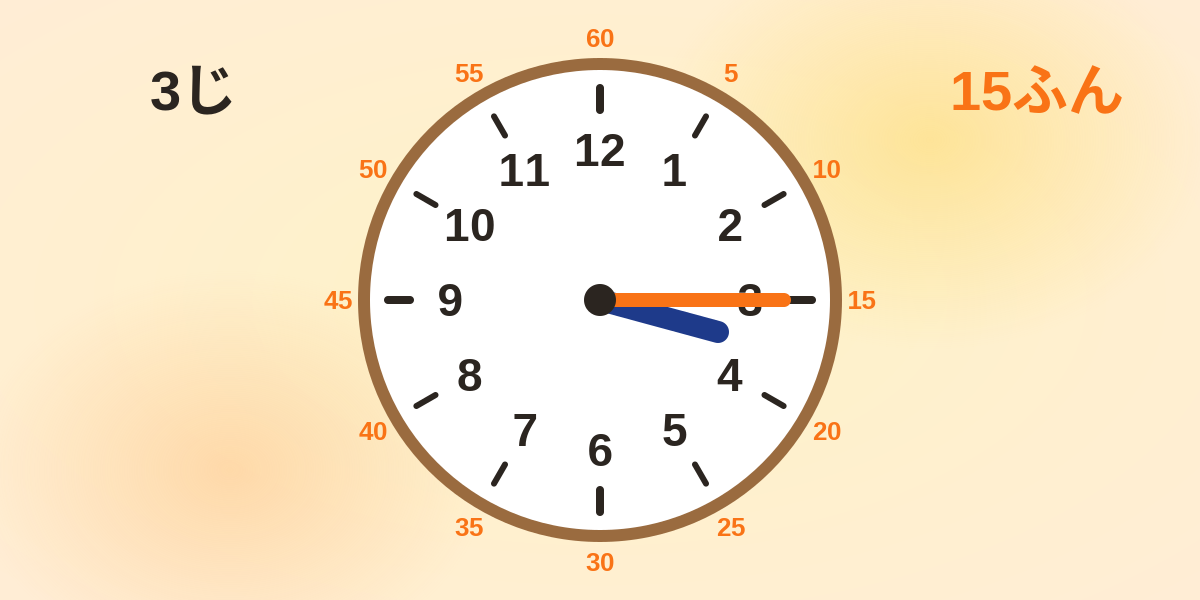
Short answer: Children can read o’clock at 5–6, half past and five-minute steps in first grade, and to the minute by the end of first grade or in second. Japanese first-grade maths covers hours and minutes. Where they get stuck is predictable: the short hand sitting between two numbers, and the long hand’s 3 meaning fifteen. This post covers teaching in the order children actually learn, the Japanese ふん/ぷん rule, habits that work at home, and the practice clock with draggable hands we built.
Why a clock is hard
A clock is the first tool a child meets with two scales on the same face. The same “3” means three o’clock on the short hand and fifteen minutes on the long one. Reading numbers and reading a clock are different skills.
And the short hand moves slowly: through the whole of three o’clock it sits somewhere between 3 and 4, pointing at no number at all. “The short hand reads the number it has passed” is a rule that has to be felt, not just heard.
The order they get stuck, which is the order to teach
The first-grade textbook order is the order of the walls.
1. O’clock (ages 5–6)
Only times where the long hand is on 12. The child learns to read the short hand. The trick here is not to let them touch the long hand yet: snack at three, bed at eight, read from the short hand alone.
2. Half past (early first grade)
The long hand on 6 means “half past”, and for the first time the short hand sits between two numbers. “Between 3 and 4, but it is half past three.” This is the first wall.
There is one way through it: turn the long hand and let the child watch the short hand move with it. On a real clock, or a teaching clock whose hands are geared, turning the long hand from 12 to 6 moves the short hand from 3 to halfway to 4. After enough of that, “the short hand is still nearer 3” makes sense. A clock whose hands move independently cannot teach this.
3. Five-minute steps (mid first grade)
Long hand on 1 is five, on 2 is ten, on 3 is fifteen. Number times five is the second wall, and it comes before times tables, so children count in fives.
As schools do, put the minute numbers (5, 10, 15 …) around the outside: the number the long hand points at is the minutes. Remove them once that is easy.
4. To the minute (late first grade to second)
Count the ticks: “fifteen, and two more ticks, seventeen”. In Japanese, the ふん/ぷん reading comes in here.
The ふん/ぷん rule
Adults do it without thinking; children need the rule. It goes by the last digit.
| Last digit | Reading | Examples |
|---|---|---|
| 1, 3, 4, 6, 8, 10 | ぷん | いっぷん, さんぷん, よんぷん, ろっぷん, はっぷん, じゅっぷん |
| 2, 5, 7, 9 | ふん | にふん, ごふん, ななふん, きゅうふん |
Hours have exceptions too: 4時 is よじ, 7時 is しちじ, 9時 is くじ. Many children say よんじ, ななじ, きゅうじ; it is not wrong, but school teaches the former.
Habits that work at home
- Start from the day’s times. Snack at three, bath at seven. O’clock only at first, and “look, nearly time”.
- Read it and set it. Not just “what time is it?” but “set it to quarter past three”. Setting is harder, and a child who can set a clock can read one.
- Digital is for checking. Shown first, a digital display stops the child looking at the hands. Analog first, digital to confirm.
- Don’t correct a miss. “Quarter past two” gets “close, which number has the short hand passed?”. As with riddles and times tables, children keep going when a miss is safe.
A practice clock with hands you turn
Play & Learn › Telling the time is the order and the habits above turned into a tool.
- The hands move like a real clock: turning the long hand moves the short one a little, and one full turn moves it one number, so “between the numbers” becomes something the child has felt
- Levels in textbook order: o’clock → half past → five minutes → one minute
- Three ways to play: Read it (pick one of three times; the wrong cards are built from real mistakes — the short hand read one hour off, the long hand one tick off, half past mixed with o’clock), Set it (turn the hands to the time Poppy says), Free play (turn and listen; “set it to three for snack time”)
- Minute numbers and digital display switch on and off
- Japanese or English: 「3じ 15ふん」 and “three fifteen”, on the same hands
- The page lists how to read every hour and minute (よじ, くじ, いっぷん, じゅっぷん …)
- Free, no login, records stay on the device
Frequently asked questions
My child is in second grade and still cannot read a clock. Is that late? No. Many second-graders are stuck on the short hand between the numbers, and geared hands often unlock it quickly. Going back to “half past” in order is the shortest route.
Do children still need analog clocks? Only an analog clock lets a child see “how long until” as an area on the face. The sense of duration grows from the hands.
Should I buy a toy teaching clock? Worth it if the hands are geared together. Ungeared ones cannot teach the main wall. The tool above is geared.
Summary
- O’clock at 5–6, half past and five minutes in first grade, to the minute by late first or second
- The walls are the short hand between numbers and the long hand’s 3 meaning fifteen; geared hands are the shortest route
- ふん/ぷん goes by the last digit; mind 4時, 7時, 9時
- The practice clock is free, in Japanese and English
Ready to try KidTalk?
Turn your child's curiosity into stories with safe, friendly AI.
Get started for freeRelated Articles

November 16, 2026
Addition and Subtraction: What Age? Within 10 at 5–6, Carrying in First Grade, and Why Counting on Fingers Is Fine

November 16, 2026
Kanji: what age? 80 in grade 1, reading before writing, and stroke order you trace rather than memorise

November 15, 2026